
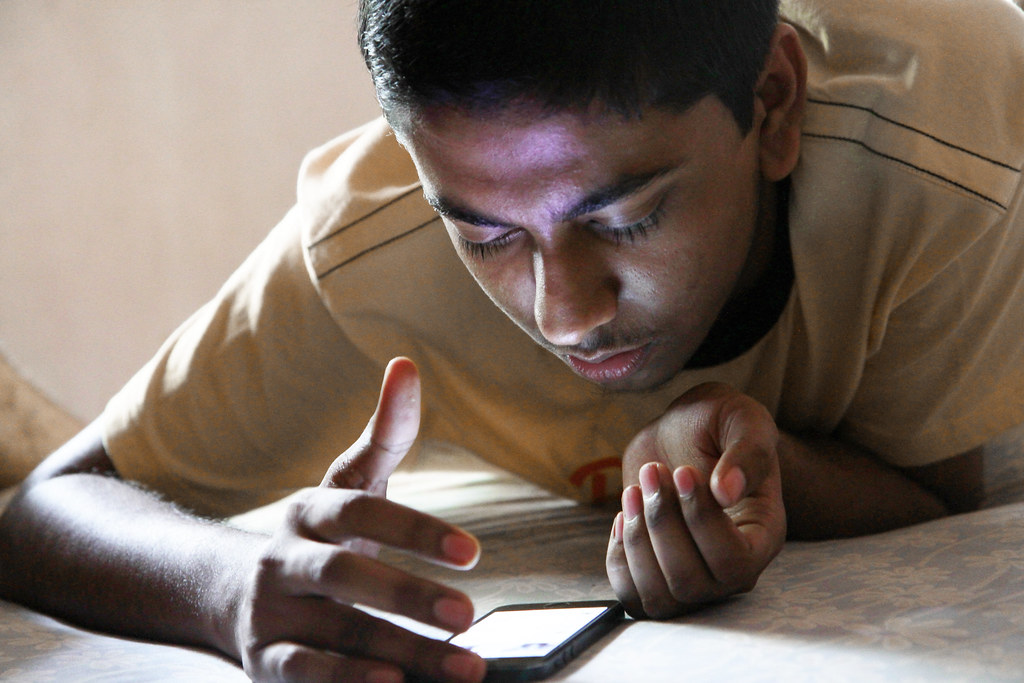
For years, the deal was simple and largely unspoken: platforms got attention, kids got addicted, and regulators looked the other way. That deal is now falling apart on two continents at once. France just told its youngest citizens they can’t log on to social media until they’re 15. India, meanwhile, has spent the past two years quietly pulling the plug on dozens of streaming platforms and pushing a nationwide campaign against “digital addiction.” Different countries, different tools, same unmistakable signal: the era of unregulated youth screen time is ending, and nobody is quite sure what replaces it.
France draws a hard line
Fox News reported that France has become the first country in the European Union to ban social media outright for children under 15, calling it a “landmark” move. It’s the kind of policy that sounds simple on paper — no accounts, no access, no exceptions — but represents a genuine break from how Europe has typically handled Big Tech. Brussels has spent years leaning on disclosure rules, fines, and content moderation mandates. An outright age ban is blunter, more paternalistic, and far easier for parents to understand than another 40-page terms-of-service update nobody reads.
The bigger question hanging over Paris is whether a national ban can actually work against platforms built to be borderless. Social media companies operate across jurisdictions, VPNs are a Google search away, and teenagers have never met a digital wall they couldn’t route around. Still, symbolism matters in policy, and France setting a precedent inside the EU gives other member states a template — and possibly the political cover — to follow suit.
India’s quieter, broader campaign
While France reached for a ban, India has been running a much larger, more diffuse operation. ANI News reported that the country’s government has “strengthened safeguards against digital addiction,” reaching more than 11.37 lakh — over 1.1 million — citizens through 6,650 cyber awareness workshops. That’s not a single dramatic policy; it’s a slow-burn public health campaign, treating compulsive screen use less like a legal violation and more like a habit to be un-learned, one workshop at a time.
It’s a notably different philosophy than France’s ban-first approach. Where Paris is restricting access at the door, New Delhi appears to be betting on education and awareness — teaching citizens, especially younger ones, to recognize and resist the pull of endless scrolling rather than removing the option altogether. Both approaches are responding to the same underlying anxiety: that unsupervised digital life is doing measurable harm to young minds, and that waiting for platforms to self-regulate hasn’t worked.
The OTT purge nobody saw coming
India’s crackdown hasn’t stopped at awareness campaigns. The Hindu reported that the government has disabled 50 OTT (over-the-top streaming) platforms for displaying obscene content and other violations. A separate ANI News report, citing India’s Ministry of Electronics and Information Technology (MeitY), confirmed the same figure — 50 platforms shut down over a two-year period — framing it as part of a broader push to strengthen online safety measures.
Fifty platforms is a striking number. It suggests this isn’t a one-off enforcement action against a rogue app, but a sustained, systematic sweep across India’s sprawling streaming ecosystem — an industry that exploded during the pandemic as dozens of low-budget platforms rushed to fill gaps left by bigger names like Netflix and Amazon Prime. Many of those smaller players built audiences on exactly the kind of explicit, unregulated content that mainstream platforms wouldn’t touch. MeitY’s action, as described by ANI News, targets that grey-market corner of the streaming world directly.
The tension nobody’s resolved
Here’s where things get uncomfortable. Banning access, shutting down platforms, and running workshops are all popular moves — parents, teachers, and public health advocates tend to applaud any government willing to say “enough.” But each approach carries a cost that rarely makes the celebratory headlines.
A hard age ban like France’s raises immediate enforcement questions: who verifies age, how, and what happens to the teenagers who inevitably find workarounds? Awareness campaigns like India’s are gentler but slower, and skeptics could reasonably ask whether 6,650 workshops move the needle against algorithms engineered by some of the best-funded engineering teams on Earth. And platform shutdowns, however justified on content grounds, sit uneasily next to broader debates about censorship and who gets to decide what counts as “obscene” — a word that has meant very different things to very different governments.
None of this is a reason to dismiss what’s happening. It’s a reason to watch it closely. These are the opening moves in what looks like a much longer, messier fight between states and the platforms that increasingly shape how young people see the world.
What comes next
Expect two things to happen almost immediately. First, other EU governments will watch how France’s ban performs — how many workarounds emerge, how enforcement actually looks in practice, whether Brussels moves to codify something similar bloc-wide. Second, India’s dual-track model of education plus enforcement will likely expand rather than shrink; a government willing to disable 50 platforms and run thousands of workshops has clearly decided this is a long-term priority, not a headline-driven stunt.
What’s really at stake isn’t just app access or streaming licenses. It’s a redefinition of who bears responsibility for a generation raised inside algorithmic feeds — platforms, parents, or the state. France has answered with a wall. India has answered with a mix of walls and lectures. Neither answer is complete, and both will be tested, loudly, in the months ahead.
Sources
- 50 OTT platforms disabled for displaying obscene content , other violations : Govt . — thehindu.com
- Centre strengthens safeguards against digital addiction ; 11 . 37L+ citizens reached through 6 , 650 cyber awareness workshops — aninews.in
- India Strengthens Digital Addiction Laws , Reaches 11 . 37L Citizens — newkerala.com
- Govt disabled 50 OTT platforms in two years as it strengthens online safety measures : MeitY — aninews.in
- France bans social media for children under 15 in a landmark EU first — foxnews.com











Leave a Reply