
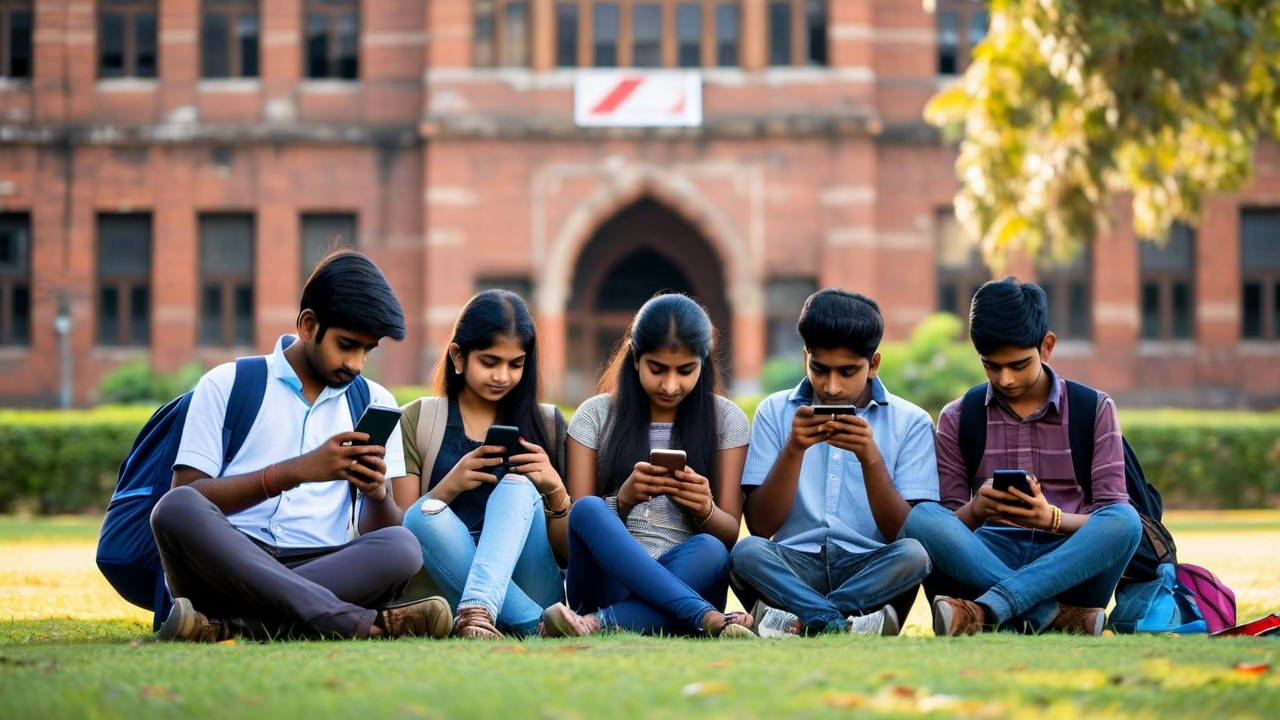
Something strange is happening in Indian politics this month. The Congress scion, the head of the country’s most influential Hindu nationalist organization, and the prime minister himself are all, in their own clumsy and occasionally endearing ways, trying to sound like they understand 22-year-olds. It is the political equivalent of your uncle learning to say “no cap” — and it is happening because a wave of student-led protest has spooked the entire establishment into paying attention to a generation it had mostly ignored.
The trigger, as reported across Indian and international outlets in recent days, was a surge of Gen Z-driven unrest that rattled political leaders enough to change how they talk in public. What followed was a scramble — part charm offensive, part damage control — that says less about any one politician’s social media savvy and more about how nervous India’s ruling class has become about a generation it can no longer predict or fully control.
The Batman Reply Heard Round Instagram
Start with Rahul Gandhi. According to oneindia.com, the Congress leader hosted an Instagram AMA in which he fielded a wave of questions from young users, and one particular reply — invoking Batman — went viral among Gen Z users almost instantly. It is a small moment, but small moments are exactly the currency of youth politics online: a single relatable line can travel further than a thousand policy speeches. For a politician whose party has spent years trying to shed an image of being out of touch, a viral meme-friendly answer is not a throwaway gag. It is a data point his strategists will study closely.
What makes it notable isn’t that Gandhi tried to be funny online — plenty of politicians do that and fall flat. It’s that it landed, at a moment when Gen Z’s attention is otherwise consumed by protest, distrust of institutions, and a general allergy to anything that smells like a scripted photo-op.
The RSS Chief’s Unexpected Olive Branch
Far more striking is what came from the other end of the ideological spectrum. Oneindia.com reported that Mohan Bhagwat, chief of the Rashtriya Swayamsevak Sangh — the ideological parent organization of India’s ruling party — publicly backed student protesters, insisting that “Gen Z are not anti-national.” That is not a small statement. The RSS has historically treated youth dissent with suspicion, often framing campus unrest as evidence of outside interference or ideological contamination. For its chief to instead vouch for the patriotism of protesting young people is a genuine shift in tone, whether it reflects conviction or simply political calculation about which way the wind is blowing.
Bhagwat’s comments matter because they set the ceiling for how the wider political right can respond to youth protest. If the RSS chief is telling his own ecosystem not to demonize Gen Z, that constrains how aggressively other figures on that side of the aisle can push back against the same demonstrators. It is, in effect, permission to de-escalate — and a signal that the protests have rattled even the institutions least inclined to sympathize with them.
Modi’s “Hi, Friend” Moment
Then there is Narendra Modi. Timeslive.co.za reported that the prime minister has pivoted toward a warmer, more casual register aimed squarely at Gen Z in the wake of the protests, greeting young audiences with an almost startlingly informal “Hi, friend.” For a leader whose public image has long leaned on gravitas and carefully staged messaging, that kind of casualness is a deliberate departure — the sort of tonal shift that doesn’t happen by accident. Governments don’t change how their leader talks to a demographic unless internal polling or unrest has told them, in blunt terms, that the old approach isn’t working with that audience anymore.
Taken together with Gandhi’s Batman moment and Bhagwat’s olive branch, Modi’s shift completes a strange tableau: three of the most powerful figures in Indian public life, from three very different institutional bases, all independently deciding that the way to handle a restless young generation is to soften their tone rather than harden it.
The Carrot Comes With a Stick
But charm is only half the strategy. Rediff.com reported that the government has separately ordered the formation of quick response teams specifically tasked with countering fake posts — a move that lands in the same news cycle as all this newfound warmth toward Gen Z. It’s worth sitting with that juxtaposition. On one hand, leaders are courting young people with relatable language and public reassurance. On the other, the state is standing up rapid-response infrastructure to police the very online spaces where that generation communicates, organizes, and, crucially, criticizes.
That is not necessarily hypocrisy — governments the world over try to combine outreach with information control during periods of unrest. But it does reveal the underlying anxiety driving both moves. The charm offensive and the quick response teams are two sides of the same coin: an establishment trying to manage a generation whose organizing tools, memes, and skepticism of authority operate largely outside the channels older politicians know how to influence.
Why This Won’t Be a One-News-Cycle Story
It’s tempting to write this off as a passing trend — a few viral moments, a few soundbites, and life returns to normal. But the underlying dynamic is structural, not seasonal. India has one of the youngest populations on earth, and a generation that came of age online, skeptical of institutions and fluent in irony, is not going to be won over by one AMA reply or one friendly greeting. If anything, the speed with which figures as different as Gandhi, Bhagwat, and Modi have all adjusted their tone suggests they know that too — this is early positioning for a much longer contest over who gets to speak credibly to India’s next generation of voters.
The real test isn’t whether a Batman joke trends for a day. It’s whether any of these institutions can sustain a tone of genuine engagement once the protests fade from headlines — or whether, as so often happens, the charm offensive quietly gives way to the more familiar instinct: manage the message, watch the platforms, and hope the moment passes.
Sources
- Rahul Gandhi Charms Gen Z With Viral Batman Reply During Instagram AMA — oneindia.com
- RSS Chief Mohan Bhagwat Backs Student Protesters , Says GenZ Are Not Anti – National — oneindia.com
- Hi , friend : Narendra Modi pivots to Gen Z after protests — timeslive.co.za
- Govt Orders Quick Response Teams Against Fake Posts — rediff.com









Leave a Reply