
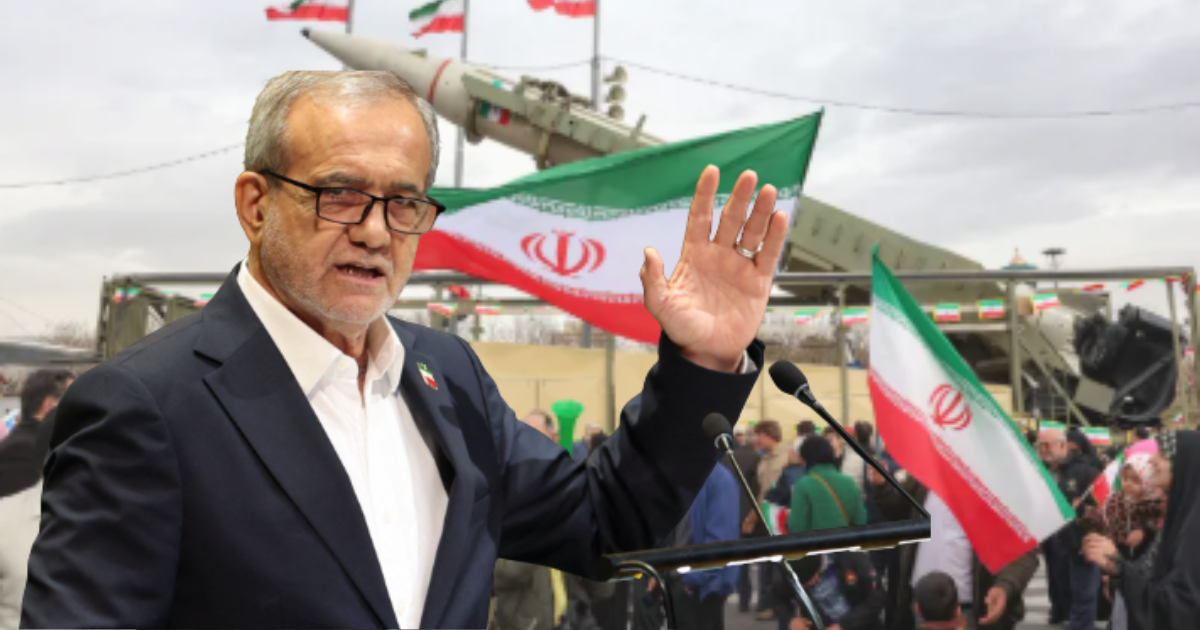
For a few tense weeks, the question hanging over the Middle East wasn’t whether a wider war would start — it was how bad it would get. Now, suddenly, the tone has shifted. Airstrikes have paused. Diplomats are talking instead of shouting. And the phrase making the rounds in Washington newsrooms isn’t “escalation” anymore — it’s “off-ramp.” NPR and WTOP both posed the same pointed question this week: can the United States and Iran actually take it?
It’s a fair question, because off-ramps in this particular conflict have a habit of vanishing just when everyone thinks they’ve found one.
From Strikes to Silence
According to reporting from The Globe and Mail, the U.S. has paused air strikes as talks with Iran show signs of progress — a notable change after a stretch in which the two sides seemed to be sliding toward direct confrontation rather than away from it. NBC 5 Dallas-Fort Worth carried similar reporting, describing a moment where the guns have gone quiet even as negotiators keep working the phones and the back channels. That combination — a real pause paired with real talks — is the kind of detail that separates a genuine de-escalation from a simple lull between rounds.
None of this means the underlying dispute has been resolved. It means both sides have, for now, decided that talking is more useful than shooting. That’s a low bar, but after the past several weeks it’s a meaningful one.
Trump’s Pivot
Moneycontrol reported that President Trump has pivoted away from war talk even as the Iran conflict enters what the outlet called a “dangerous new phase” — a phrase that captures the strange duality of this moment. The rhetoric has softened, but the underlying situation hasn’t necessarily gotten safer; it’s just moved from the battlefield to the negotiating table, where the risks are quieter but no less real. SBS’s morning bulletin framed it plainly: Trump is hopeful that diplomacy can end the conflict. Hope is doing a lot of work in that sentence, and everyone covering this story seems to know it.
Presidents pivot from war talk for all sorts of reasons — political fatigue at home, pressure from allies, hard intelligence about what escalation would actually cost, or simply the recognition that airstrikes had reached the limit of what they could accomplish without dragging the U.S. into something much larger. Which of those forces is driving this particular pivot isn’t fully clear from the public reporting, and it’s worth resisting the urge to guess. What is clear is that the shift is real enough that multiple outlets, from SBS in Australia to Moneycontrol in India to the U.S. wire services, are all describing the same change in posture at roughly the same time.
The Trouble With Off-Ramps
“Off-ramp” is a comforting metaphor because it implies an exit that already exists — you just have to steer toward it. Real diplomacy rarely works that way. Off-ramps in conflicts like this one usually have to be built in real time, negotiated clause by clause, with each side testing whether the other is serious or just buying time to regroup. NPR and WTOP’s shared framing of the question — can the U.S. and Iran take the off-ramp — is less a prediction than an acknowledgment that the exit is still under construction, and that either side could still decide the toll is too high.
That’s the tension running underneath every story in this cluster of coverage. A pause in strikes is not a ceasefire. Talks “showing signs of progress,” as The Globe and Mail put it, is not the same as a deal. Every one of these outlets is describing motion in the right direction, but none of them is describing an arrival.
Why the Stakes Reach Beyond Iran
This isn’t a contained regional story, and that’s part of why it commands so much attention. A prolonged U.S.-Iran confrontation would ripple through oil markets, shipping lanes, and alliances across the Middle East that are already strained by other conflicts playing out in the region. It would also test how far Washington’s partners and rivals alike are willing to go in either direction — supporting a diplomatic resolution or hedging against a military one. The fact that a pause and renewed talks were considered significant enough to lead coverage across outlets on three continents this week says something about how closely the rest of the world has been watching for exactly this kind of signal.
There’s also a domestic dimension. A president who spent weeks signaling toughness now has to manage the political risk of appearing to back down, while also claiming credit if diplomacy actually works. That balancing act — hopeful but not soft, firm but not reckless — is baked into the careful language coming out of the White House, and it’s part of why “hopeful diplomacy can end the conflict,” as SBS characterized Trump’s position, is such a deliberately hedged phrase.
What Comes Next
The most honest answer, based on what’s been reported so far, is that nobody outside the negotiating rooms in Washington and Tehran knows for certain whether this pause holds. Airstrikes have stopped before during this broader standoff without producing a lasting deal, and the pattern of talks-then-tension has repeated itself more than once in recent memory. What’s different this time, according to the coverage from The Globe and Mail and NBC 5, is that the pause and the progress are being described together, as connected rather than coincidental — suggesting each side sees enough value in the current quiet to keep protecting it, at least for now.
The coming days will likely tell the real story. If the pause extends and negotiators start producing specifics rather than signals, the “off-ramp” framing will start to look less like a hopeful metaphor and more like an accurate description of where this conflict is actually headed. If it collapses, the world will find out very quickly just how dangerous the phase Moneycontrol described really is. Either way, this is a story worth watching closely, because the difference between those two outcomes is measured not in headlines, but in whether the quiet holds.
Sources
- Trump hopeful diplomacy can end Iran conflict | Morning News Bulletin 28 July 2026 — sbs.com.au
- Trump pivots from war talk as Iran conflict enters dangerous new phase — moneycontrol.com
- Can the U . S . and Iran take the off – ramp ? — npr.org
- U . S . pauses air strikes as Iran talks show signs of progress — theglobeandmail.com
- Airstrikes have paused and talks are pressing forward . But can the US and Iran take the off – ramp ? — wtop.com
- U . S . and Iran airstrikes have paused and talks are pressing forward – NBC 5 Dallas – Fort Worth — nbcdfw.com









Leave a Reply