
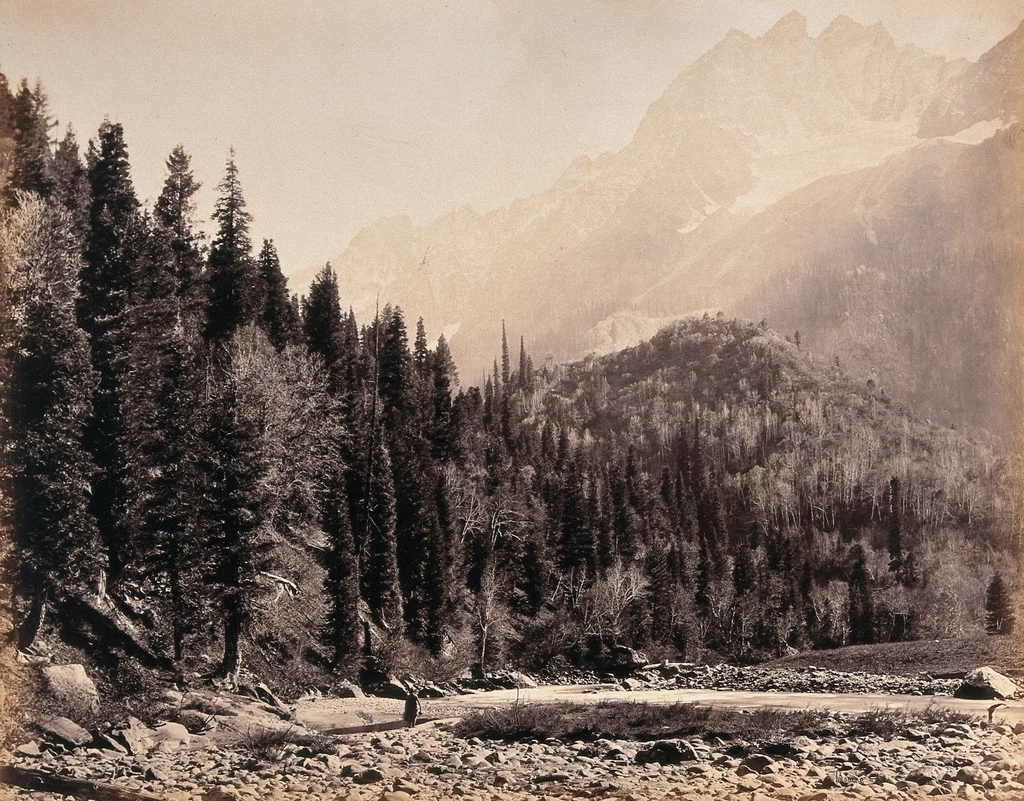
Stand on either side of the Line of Control that has sliced through Kashmir since 1947, and you’d be forgiven for thinking you’re looking at two entirely different countries, not two halves of the same disputed territory. On one side, officials tout new highways, tourist arrivals, and investment summits. On the other, residents have taken to the streets over the price of flour and the cost of keeping the lights on. The gap between those two realities is widening, and it’s reshaping how the world’s most militarized border dispute gets talked about — not just in New Delhi and Islamabad, but everywhere people still ask who Kashmir actually belongs to.
A Border Drawn in a Hurry, Contested Ever Since
The Kashmir dispute traces back to the chaotic partition of British India in 1947, when the princely state’s ruler dithered over which country to join and both India and Pakistan sent in troops. The result was a ceasefire line — later formalized as the Line of Control — that left roughly two-thirds of the former princely state under Indian administration and the rest under Pakistani control, a division neither government has ever formally accepted as final. India calls its portion Jammu and Kashmir; Pakistan refers to its share as Azad Jammu and Kashmir, while critics and much of the international community more often use the term Pakistan-occupied Kashmir, or PoK. Wars were fought over it in 1947, 1965, and 1999, and it remains one of the few borders on Earth where two nuclear-armed states stare each other down across contested ground.
New Delhi’s Bet: Integration Over Autonomy
The most consequential recent shift came in 2019, when India’s government revoked the special constitutional status that had long given Jammu and Kashmir a degree of autonomy, splitting it into two federally administered territories and opening the region to outside investment and land purchases in ways that were previously restricted. Hindustan Times reported that since then, Jammu and Kashmir has pushed to present itself as a region on the rise — pointing to renewed tourist traffic, infrastructure projects, and investment outreach as evidence that integration is paying dividends. The government has also moved, in stages, toward restoring elected representation, holding assembly elections and signaling intent to eventually restore full statehood, even as critics both inside and outside the region continue to raise concerns about civil liberties, media restrictions, and the long shadow of decades of insurgency and heavy security presence.
It’s a deliberate narrative: normalcy through development, legitimacy through economic momentum. Whether that story holds up depends on who you ask — separatist sentiment hasn’t vanished, and heavy security remains a fact of daily life for many residents. But compared to the other side of the Line of Control, the contrast New Delhi wants the world to see is stark.
Islamabad’s Other Kashmir Problem
Across the LoC, the picture Hindustan Times described is one of deepening strain rather than momentum. Pakistan-administered Kashmir has, in recent years, become a recurring site of public anger over the basics of daily life — the cost of flour, electricity bills, and taxes have all triggered waves of protest, some of them large enough to shut down roads and draw in police and paramilitary forces. Civil society groups in the region have organized repeated shutdown strikes demanding subsidies on wheat and cheaper power, arguing that a territory sitting near some of the country’s biggest hydroelectric projects shouldn’t be paying among the highest electricity rates in Pakistan. The grievances are economic on their face, but they carry an unmistakable political undertone: residents asking why a region Pakistan claims to champion internationally gets treated, in their telling, as an afterthought domestically.
That tension puts Islamabad in an awkward spot. Pakistan has spent decades positioning itself as Kashmir’s advocate on the world stage, pressing the United Nations and sympathetic governments to revisit the region’s disputed status. It’s much harder to make that case convincingly when the territory under your own administration is the one producing viral videos of protesters clashing with police over bread prices.
Why the Contrast Matters Beyond South Asia
Kashmir has always been more than a border dispute — it’s a proxy for the broader India-Pakistan rivalry, a flashpoint that has dragged in global powers from the Cold War era onward, and today a piece of a bigger regional puzzle involving China’s infrastructure ambitions along Pakistan’s northern frontier. A Kashmir narrative that favors one side reshapes diplomatic leverage on everything from trade talks to counterterrorism cooperation to how multilateral bodies frame the dispute. If Jammu and Kashmir can plausibly claim rising investment and tourist numbers while Pakistan-administered Kashmir cycles through unrest, that asymmetry becomes ammunition in a decades-old information war neither side has ever fully put down.
It also matters to the roughly equal numbers of people living on both sides of a line most of them never agreed to. For families split by the LoC — and there are many, after generations of migration and displacement — the divergence isn’t an abstraction. It’s the difference between a child attending a newly built school with government backing and a neighbor a few valleys away skipping meals because subsidized flour ran out.
What Happens Next
Neither government seems inclined to change course. India appears set to keep leaning on its integration-and-investment pitch, with statehood restoration dangled as the next milestone to watch. Pakistan, meanwhile, faces a harder balancing act: continuing to champion the Kashmir cause internationally while managing recurring unrest at home over subsidies and governance that show no sign of resolving on their own. Neither side has any incentive to formally settle the dispute — India because it now controls a larger, more developed piece of the territory it already considers integral; Pakistan because ceding the diplomatic cause would mean abandoning decades of foreign-policy investment. The Line of Control, in other words, isn’t going anywhere. What’s changing is the story each side can credibly tell about what’s happening on their side of it — and for now, that story is breaking sharply in one direction.





Leave a Reply