
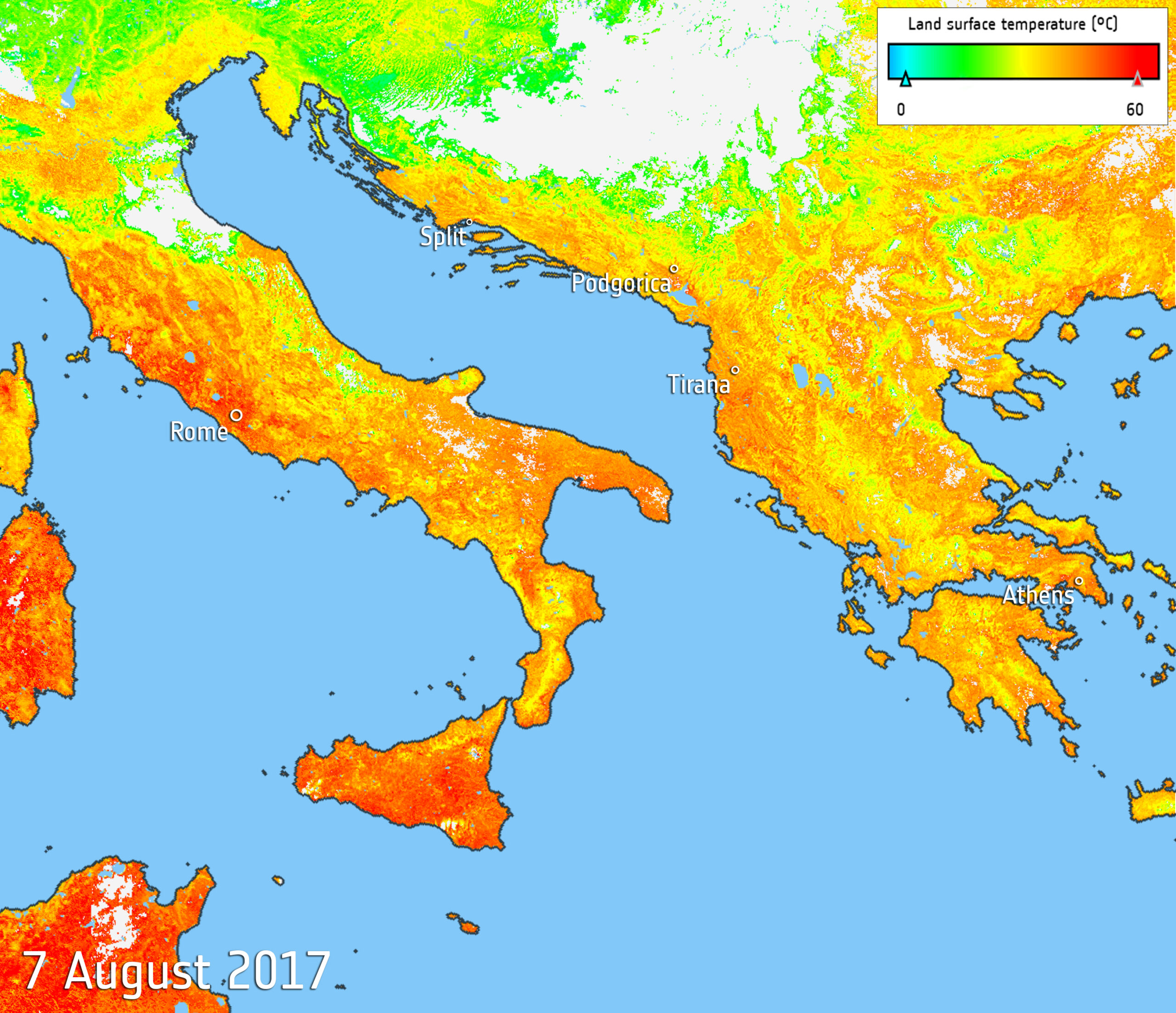
The thermometers didn’t just creep up this year — they broke records outright. Western Europe has logged its hottest June-July stretch since modern measurements began, according to the EU’s climate monitoring service, as reported by Bangkok Post, China Daily and Free Malaysia Today. Yahoo News put the human scale of it in stark terms: the heat has touched roughly 900 million people worldwide. That’s not a distant statistic about melting glaciers or dying coral. It’s grandparents in un-air-conditioned flats in Paris, farmers watching fields crack in the English countryside, and city workers rationing water in towns that never used to need to.
The bigger question hanging over the continent isn’t just “how hot did it get” — it’s what, if anything, this kind of summer actually changes. Does a record-breaking heatwave finally push climate policy back to the top of the agenda, or does it just trigger another round of emergency scrambling that fades the moment temperatures drop? That’s the tension a piece from The Conversation, syndicated by NZCity, put directly on the table this week.
A Summer That Broke the Chart
Weather records get broken every year somewhere, but this one is different in scale and reach. The EU monitor’s finding — cited by Bangkok Post, China Daily and Free Malaysia Today — is that the June-July period in Western Europe was the hottest on record, not just warm, not just above average, but the hottest since consistent tracking began. Records like this used to feel like once-a-decade events. Lately they’ve been arriving with unsettling regularity, and each new one resets the baseline for what “normal” summer heat now looks like.
Yahoo’s figure of 900 million people affected globally underscores that this isn’t a story confined to postcard cities with famous heatwaves. It’s a planet-spanning exposure event, stretching from crowded European capitals to regions far outside the headline geography, all baking under the same broad climatic shift.
The Ground-Level Damage
Heat doesn’t arrive alone — it drags drought, water stress and agricultural strain behind it. A report from theuknews.com described a severe drought pushing the United Kingdom’s food system toward crisis, arguing that the country needs structural change to withstand what’s coming. That’s a serious claim, and it fits a pattern that’s becoming familiar: extreme heat stresses crops and livestock, water tables drop, and supply chains that were built for a milder climate start to buckle.
This is the part of the climate story that rarely makes for dramatic footage the way a wildfire does, but it may matter more in the long run. A wildfire burns and then it’s over. A drought grinds on, quietly reshaping what farmers can grow, what food costs, and how resilient a country’s supply chain actually is. When the outlet frames this as a “crisis,” it’s pointing to something structural, not seasonal — a system that needs rethinking, not just a bad year to wait out.
Action or Just Reaction?
Here’s where the story gets genuinely interesting, and where The Conversation’s analysis — also picked up by NZCity — earns its place. The piece poses a pointed question: does a summer this extreme finally force climate action back onto the political agenda, or does it simply trigger disaster response mode, where governments spend their energy and budgets managing the emergency in front of them rather than addressing the root cause behind it?
It’s a distinction that matters enormously. Disaster response is reactive by design — emergency cooling centers, water restrictions, drought relief payments, wildfire crews. It’s necessary, but it treats the heatwave as the problem rather than as a symptom. Climate action, by contrast, means the harder, slower work: cutting emissions, retrofitting infrastructure, rethinking energy grids and food systems so the next heatwave does less damage. Politically, disaster response is easier to sell because it’s visible and immediate. Climate action asks voters and leaders to sacrifice now for a payoff that’s diffuse and years away. Extreme summers have a way of making the reactive option look like enough, even when it isn’t.
There’s historical precedent for skepticism here. Europe has weathered brutal heatwaves before — deadly ones — and each time there’s a burst of political rhetoric about resilience and adaptation. But rhetoric has a short shelf life once the heat breaks and headlines move on. The open question this year is whether the sheer scale of the record — hottest June-July on record, touching hundreds of millions of people — is enough to break that cycle, or whether it becomes just another data point in a summer everyone will remember for the discomfort, not the policy shift.
Why This Time Might Be Different — Or Might Not
There’s a case for cautious optimism. Records this decisive are hard to spin away, and the drought’s tangible threat to Britain’s food system — as reported by theuknews.com — gives the issue a pocketbook urgency that abstract temperature charts never quite manage. Food prices and water shortages have a way of cutting through political noise faster than melting ice caps ever did.
But there’s also a case for déjà vu. Disaster response tends to win out in the short term because it’s what governments are built to do under pressure: address the visible emergency, reassure the public, move on. The deeper structural questions — how to decarbonize energy systems, how to redesign agriculture for a hotter climate, how to protect vulnerable populations before the next record rather than during it — require political capital that’s much harder to spend, especially once temperatures cool and urgency fades with them.
What to Watch Next
The real test won’t be this summer’s headlines — it’ll be what European governments do once autumn arrives and the emergency footing relaxes. Do investments in water infrastructure and heat-resilient agriculture actually materialize, as the UK food crisis warning suggests they need to? Does policy attention genuinely shift, as The Conversation’s framing hopes, or does the conversation quietly revert to business as usual until the next record inevitably falls?
Given how often “hottest on record” has been said in recent years, the uncomfortable truth may be that this summer’s numbers won’t hold the top spot for long. The real story isn’t the record itself — it’s whether anyone in power treats it like the wake-up call it’s supposed to be.
Sources
- Can the searing European summer put climate action back on the agenda – or will disaster response take over ? – 11 – Aug – 2026 — home.nzcity.co.nz
- Bangkok Post – Western Europe experienced hottest June – July on record : EU monitor — bangkokpost.com
- Can the searing European summer put climate action back on the agenda – or will disaster response take over ? — theconversation.com
- Western Europe experienced hottest June – July on record : EU monitor — global.chinadaily.com.cn
- Western Europe logs hottest June – July on record , EU monitor says — freemalaysiatoday.com
- As severe drought hits , the united kingdom food system faces crisis – here how to change that — theuknews.com
- Western Europe sets new temperature record hitting 900 million people worldwide — yahoo.com





Leave a Reply