
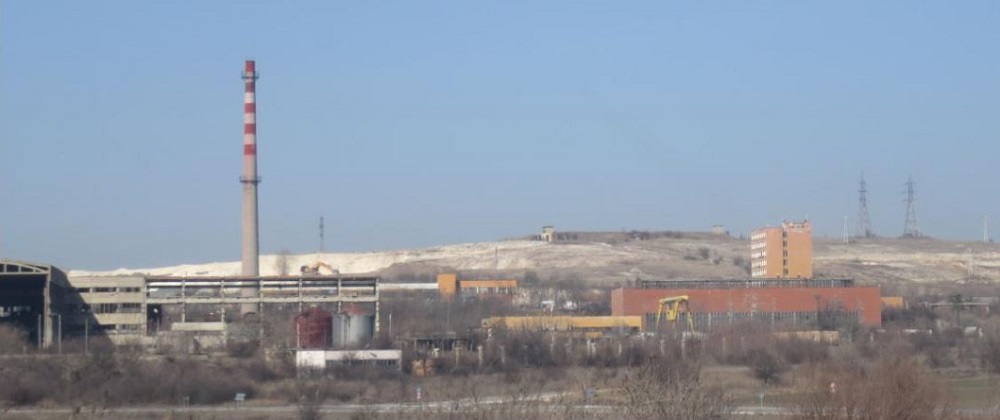
Walk into any industrial cluster in states like Gujarat, Punjab, or West Bengal and you’ll find them: small, scrappy furnaces melting scrap metal into the rebar and structural steel that hold up India’s housing boom. These are the secondary steelmakers — thousands of small and mid-sized businesses that rarely make headlines but quietly produce a huge chunk of the steel powering the country’s construction sites. Now a new report says these same firms are sitting on an unusual opportunity: cut their electricity bills by as much as 34 percent a year, just by switching how they power their furnaces, according to the Economic Times.
The Hidden Engine of India’s Steel Story
When people picture India’s steel industry, they usually think of giant integrated plants with blast furnaces the size of apartment buildings. But a huge share of the country’s steel actually comes from smaller operators running induction furnaces and electric arc furnaces — the secondary steel sector. These are classic MSMEs: family-run or closely held businesses, thinner margins, and none of the bargaining power that lets steel giants negotiate cheap bulk power deals. For them, electricity isn’t just an operating cost. It’s often the single biggest line item standing between profit and loss, since melting scrap into usable steel is enormously energy-intensive.
That’s exactly why the new report, covered by the Economic Times, is generating buzz. It suggests these MSMEs could slash their annual power bills by up to 34 percent through a shift toward renewable power sources — a number striking enough that wire coverage of the finding, including India-focused stories picked up by outlets such as news4jax, the Winnipeg Free Press, and the Gazette Xtra, spread quickly across regional papers in the U.S. that syndicate international business news.
Why the Math Suddenly Works
For years, renewable power made sense for climate reasons but was a tougher sell on pure economics for heavy industry, especially for smaller firms without the capital to build their own solar or wind installations. What’s changed is the plumbing behind clean power procurement. Group captive power arrangements, third-party power purchase agreements, and falling solar tariffs have made it increasingly viable for clusters of smaller manufacturers to buy renewable electricity without owning a single panel themselves. Instead of one factory building a solar farm alone, several MSMEs can pool demand, share infrastructure costs, and lock in power at rates below what the local grid or diesel backup would charge.
That structural shift is the quiet story behind the headline number. It’s not that renewables suddenly became cheap overnight — it’s that the financing and contracting tools needed to get that cheap power into the hands of small industrial users have matured enough to make a real dent in operating costs. For a sector operating on thin margins, a bill reduction in the double digits isn’t a nice-to-have. It can be the difference between staying competitive and shutting down.
A Global Preview: What Heavy Industry Renewable Deals Look Like at Scale
India’s secondary steelmakers aren’t the only heavy industry players wrestling with this calculus. The Guardian reported that Australia’s largest aluminium smelter is set to run on renewables by 2023, after Rio Tinto struck a roughly $2.5 billion deal involving taxpayer support to make the transition happen. Aluminium smelting, like steelmaking, is punishingly energy-hungry, and the fact that a major industrial operator needed a large public-private bailout-style deal to make the renewable switch pencil out is a useful reality check. It shows that even for big, well-capitalized companies, moving heavy industry onto clean power isn’t automatic — it usually requires policy support, patient financing, or both.
That context matters for India’s much smaller, much less capitalized steel MSMEs. If a company the size of Rio Tinto needed billions in backing to electrify its smelting operations, the challenge for a modest induction-furnace operator in a district industrial estate is proportionally just as steep, even if the dollar figures are far smaller. The upside the new report points to is real, but realizing it at scale will likely depend on financing mechanisms, grid access, and possibly government incentives tailored specifically to smaller manufacturers rather than industrial giants.
Why the Emissions Accounting Gets Messy
There’s a wrinkle worth flagging here too. A separate report covered by 3BL Media highlighted just how much variation exists in how companies measure their Scope 1, 2, and 3 carbon emissions — the direct emissions from a company’s own operations, the indirect emissions from purchased electricity, and the far broader emissions across a company’s supply chain. That inconsistency matters for a story like this one. When a steel MSME switches to renewable power, it’s primarily improving its Scope 2 footprint — the emissions tied to electricity use. But steel is also a textbook Scope 3 headache for everyone downstream who buys it, from construction firms to exporters facing carbon border rules abroad.
As measurement standards vary, it becomes harder to know exactly how much a shift like this moves the needle on India’s broader industrial emissions picture, even as it clearly helps individual companies’ bottom lines. The savings are tangible; the climate accounting is still catching up.
What Happens Next
The bigger test now is whether this potential savings translates into actual adoption. Reports flagging a 34 percent opportunity are one thing; getting thousands of cash-strapped MSMEs to sign long-term power contracts, retrofit their operations, or join collective renewable procurement schemes is another. India has set ambitious national renewable energy targets, and its steel sector faces growing pressure from international buyers and carbon-adjustment policies abroad that reward cleaner production. For the country’s secondary steelmakers, the incentive to move is now as much financial as it is environmental.
Whether policymakers step in with financing support, whether renewable developers build products specifically for industrial clusters, and whether early movers can prove the savings are real in practice will determine if this becomes a genuine shift or just another promising report that never scales. Given how central this unglamorous corner of the steel industry is to India’s construction economy, it’s a story worth watching well beyond this week’s headlines.
Sources
- MSMEs in India secondary steel sector can reduce their power bills by up to 34 pc per year : Report — economictimes.indiatimes.com
- India small steelmakers could save money and cut emissions with switch to renewable power — news4jax.com
- India small steelmakers could save money and cut emissions with switch to renewable power – Winnipeg Free Press — winnipegfreepress.com
- India small steelmakers could save money and cut emissions with switch to renewable power | Nation / World — gazettextra.com
- Australia largest aluminium smelter to run on renewables by 2023 after Rio Tinto strikes $2 . 5bn taxpayer bailout deal | Rio Tinto — theguardian.com
- Scope 1 , 2 , and 3 Carbon Measurements Show Big Variations — 3blmedia.com











Leave a Reply