
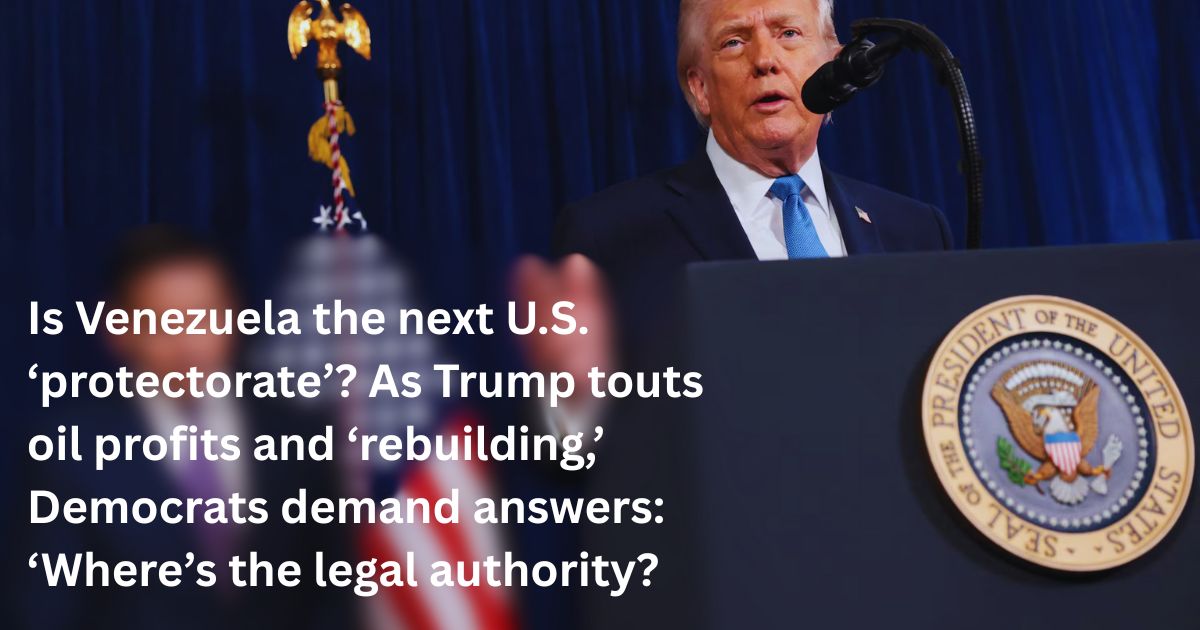
WASHINGTON, D.C. President Donald Trump declared on Wednesday that the United States intends to maintain oversight of Venezuela for years, emphasizing plans to harness the nation’s vast oil reserves while dismissing concerns about the legality or duration of the intervention. The remarks followed a high-stakes Oval Office interview where Trump detailed ambitions to “rebuild [Venezuela] profitably” and stabilize global oil markets through direct control of the country’s energy sector.
Oil Extraction and “Profitable Rebuilding”
Trump confirmed that the U.S. has already begun redirecting Venezuelan oil exports, citing a recent deal to acquire 30–50 million barrels of heavy crude. “We’re taking oil in a way that benefits both nations,” he said, though he acknowledged that modernizing Venezuela’s dilapidated oil infrastructure could take years. The administration’s three-phase plan, spearheaded by Secretary of State Marco Rubio, includes indefinite U.S. management of oil sales, with profits purportedly earmarked for Venezuela’s economic recovery.
The strategy has drawn sharp criticism from Democratic lawmakers, who argue that the intervention lacks congressional authorization and risks entangling the U.S. in a protracted nation-building effort. “This is a slippery slope toward another forever war,” warned Senator Elizabeth Warren (D-MA).
Operation Success and Global Reactions
Trump touted the covert mission that led to the capture of former President Nicolás Maduro as a “flawless” contrast to past U.S. failures, specifically referencing the 1980 Iran hostage rescue under Jimmy Carter and the 2021 Afghanistan withdrawal. “No helicopters crashing, no Biden-style chaos—just success,” he said. The operation, which involved a replica of Maduro’s compound built in Kentucky, resulted in over 70 casualties, including Cuban advisors.
Meanwhile, regional dynamics shifted as Trump revealed a phone conversation with Colombian President Gustavo Petro, who sought to ease tensions after Trump threatened military action over cocaine production. The call, which Trump live-posted on social media, ended with an invitation for Petro to visit Washington.
Political Ambiguity and Interim Government Concerns
Notably absent from Trump’s remarks was any commitment to restoring Venezuela’s democratic processes. When pressed on why the U.S. recognized Maduro loyalist Delcy Rodríguez as interim leader instead of Nobel laureate María Corina Machado, Trump deferred to Rubio, stating, “Marco handles those details.” He similarly sidestepped questions about timelines for elections, saying only that Venezuelans would “thank us later.”
Vice President JD Vance and Rubio, both present during the interview, declined to comment on legal justifications for the oversight. Analysts speculate that the administration is leveraging Venezuela’s crisis to bolster domestic energy prices and counter Chinese and Russian influence in the region.
Looking Ahead
As U.S. warships remain stationed off Venezuela’s coast, Trump hinted at a potential visit to Caracas “when it’s safe,” signaling confidence in the interim government’s cooperation. Yet with Maduro’s allies still dominating state institutions and public protests erupting, challenges loom. “We’re in this for the long haul,” Trump said, “and it’s going to be very, very profitable.”
For Venezuelans, the path forward remains uncertain—caught between a collapsed regime and a foreign power poised to reshape their nation’s future.
Follow for updates on this developing story.




Leave a Reply